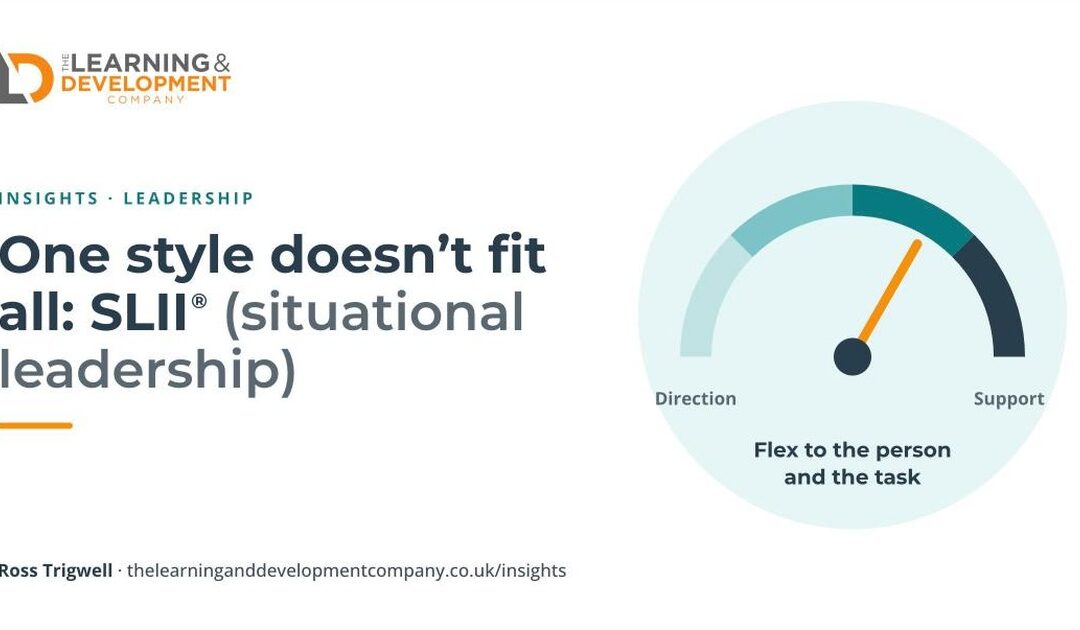
Most managers have a default style. Some are natural directors: clear instructions, close follow-up. Others are natural supporters: encouraging, hands-off, “my door’s always open”. Both work brilliantly, for some people, on some tasks. And both go wrong when they’re used on the wrong person at the wrong time.
Picture a manager with two new starters: a graduate in their first job, and an experienced analyst who’s done the role for ten years. The manager treats them the same: daily check-ins, every piece of work reviewed before it goes out. The graduate thrives. The analyst starts to wonder why they were hired. Same manager, same style: one person flourishing, the other quietly looking elsewhere.
It’s a bit like bringing up a child, not that anyone wants to be managed like one. When children are small, they need high direction: clear structure, firm boundaries and someone showing them how things are done. As the years go on, good parents gradually step back, give them more of a voice and let them make their own decisions. Keep treating a teenager like a toddler and you get frustration, not growth.
People at work go through the same journey, only faster, and they can be at different stages on different tasks. The graduate needs the structure. The analyst needs the room. The skill is noticing where each person is, and loosening the reins as they grow.
Managing and leading are different jobs
John Kotter put it simply: management brings order and consistency, while leadership brings change and movement. Every manager needs both, yet most of us spend nearly all our time managing, and very little leading.
SLII® (situational leadership): the same person, different needs
Your best analyst might need nothing from you on the monthly report, but real support the first time they present to the board. The same person can be an expert on one task and a beginner on the next. Their confidence can change too, even when their skills don’t.
That’s the idea behind SLII® (situational leadership), developed by Ken Blanchard and colleagues: there’s no single best style, only the style that fits what this person needs, on this task, right now.
Where it goes wrong
Most leadership frustrations come from a mismatch. Too much direction for someone who’s capable feels like micromanagement and drains their motivation. Too little for someone who’s new feels like being left to sink. Neither manager meant any harm. They just used their default.
So the most useful question isn’t “What’s my leadership style?” It’s “What does this person need from me, right now?”
Learning to read what people need, and to flex your approach, is a core theme of our ILM Level 3 and Level 5 in Leadership & Management, available in person in London or by distance learning. Our next in-person element runs on 1 & 2 December. Find out more or call 0207 101 3619.
Want your managers to learn this? We deliver one-day SLII® training for teams of managers, in-house or live online, as a Blanchard Authorized Partner. For the four styles in more detail, see the four leadership styles in SLII®.